

Learning Support
Ignite Your Potential
Purpose
The purpose of Salamah College’s Learning Support Department is to ensure all students, including those with diverse learning needs, have access to a quality education and are supported to achieve their full potential through inclusive and personalised learning experiences. Learning Support at Salamah College is designed to assist students who require adjustments to effectively access the curriculum. These adjustments are implemented by classroom and subject teachers, often in collaboration with the Learning SupportDepartmentto ensure that students receive the necessary support within their learning environment.
All teachers share the responsibility of providing inclusive education by differentiating instruction, making appropriate curriculum adjustments, and offering tailored support to meet individual student needs. At Salamah College, a whole-school collaborative approach is embraced to ensure that every student receives the support they need to succeed academically and thrive in a nurturing inclusive learning environment.
Multi-Tiered System of Support (MTSS) Framework
The Learning Support Team at Salamah College adopts a Multi-Tiered System of Support (MTSS) framework that focuses on providing a continuum of support addressing students’ academic, behavioural, social, and emotional needs.This is to better assist students struggling with foundational literacy and numeracy, focusing on early identification, intervention, and progress tracking through data-driven, tiered support as follows:
- Tier 1: Universal Support – High-quality teaching for all students.
- Tier 2: Targeted Intervention – Small-group or specific strategies to support identified areas of difficulty.
- Tier 3: Intensive Individualised Support – Tailored programs for students with more significant challenges.
Students transition between tiers as their progress is assessed and needs evolve. This fluid approach ensures flexibility and responsiveness to changing dynamics.

Intervention Support Offered
At Salamah College, this includes providing one-on-one intensive support, small group instruction, modifying tasks, using assistive technology, or providing emotional support. Learning Support Department identifies and addresses the specific learning needs of each student, providing tailored support and interventions.
Individualised Support- Individual Plan (IP):
An Individual Plan (IP) is a personalised plan developed to support students with disabilities or specific learning needs in education including personalised learning goals, strategies, and educational adjustments, ensuring they receive tailored educational support to reach their full potential.
Individualised Support- Learner Profiles:
A learner profile is a comprehensive, holistic view of a student, going beyond academic scores to encompass their learning progress, strengths, interests, challenges, and well-being, aiming to personalise learning and support student growth.
Small Group Instruction:
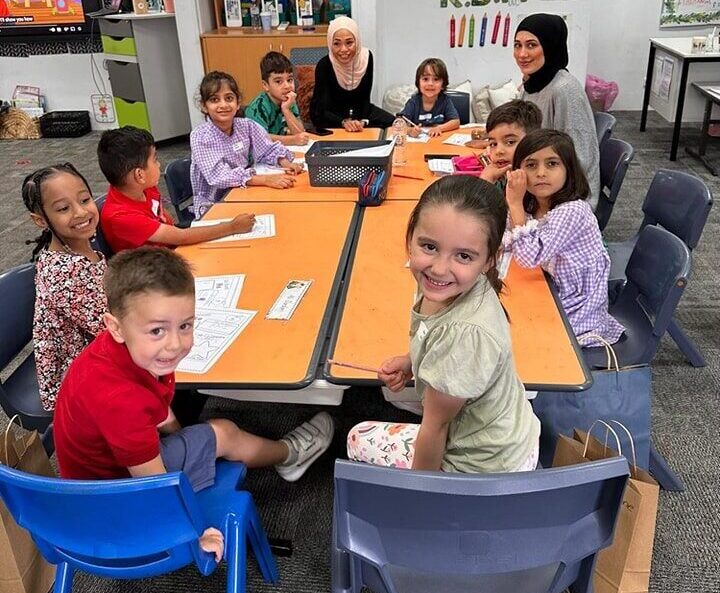
Learning Support Department provides additional support in smaller groups where the teacher can give more focused attention to the students’ needs including additional prompts, lesson adjustments, and concrete material to scaffold the learning. This helps to create an environment where students can feel more comfortable asking questions and practising skills.
In class Support:
Learning Support Department providesadditional support to students within their classroom setting to promote an inclusive learning environment. It involves collaboration between the classroom teacher and support staff to assist students with additional needs. The targeted support is tailored assistance, either one-on-one or in small groups, to help students engage with the curriculum. In K-2, the team provide intensive small group in class support during reading group sessions for approximately 4 sessions a week.
Team Teaching:
Team Teaching takes many forms in the mainstream classroom with a focus on meeting diverse learning needs within the classroom setting. The following team teaching models are available through collaboration with the Learning Support Unit:
- One Teach, One Support – The classroom teacher leads instruction while the learning support teacher provides targeted assistance to individual students or small groups.
- Parallel Teaching – The class is divided into two groups, with both teachers delivering the same lesson simultaneously, allowing for smaller student-teacher ratios and more personalised support.
- Station Teaching – Teachers divide the lesson into different activities or skill areas, and students rotate through stations where each teacher provides targeted instruction.
- Alternative Teaching – One teacher provides instruction to the majority of students while the other works with a smaller group that requires additional support or enrichment.
- Team Teaching (Co-Teaching) – Both teachers deliver instruction together, sharing equal responsibility in planning, delivering, and assessing student learning.

Collaboration:
Learning Support Department collaborate with teachers, parents, and other professionals to develop and implement effective individualised learning plans and support strategies. The department collaborates with families to build partnerships and ensure that students receive consistent support both at school and at home. These adjustments are regularly reviewed and updated in alignment with the Disability Standards for Education (2005) to maintain a supportive, equitable environment.
Differentiated Instruction:
Learning Support Department ensures that students with additional learning needs can access the full curriculum, with appropriate adjustments and accommodations within a Response to Intervention (RtI) model. Classroom teachers apply differentiated teaching strategies by tailoring some ofthelearningactivities and varying the degree of support given to individual students.
Monitoring and Evaluation:
Learning Support Department regularly monitors student progress and evaluates the effectiveness of support programs to ensure they are meeting the needs of students. Our Learning Support Team conductsperiodical student observations, progress monitoring and cumulative reviewto track and monitor student progress.
Professional Development:
Learning Support Department are often involved in professional development activities to enhance their skills and knowledge in supporting diverse learners.
Wellbeing:
Learning support Department also support the wellbeing of students with additional needs, including social emotional and behavioural needs. This may include personalised behaviour charts, Individual Behaviour Management Plans, behaviour contracts, communication book, social skill programs, social stories and anger management programs.
Direct Instruction Intervention Programs
Our Direct Instruction (DI) literacy intervention programsensure a consistent, school-wide approach to early literacy instruction and intervention, to support children at every step of their reading journey. These programs are evidence-based, explicit and effective for teaching reading skills designed for struggling readers that follows a prescriptive, systematic, and synthetic phonics approach within a Response to Intervention (RtI) model.
Mini-Lit Sage (Year 1 & 2):
MiniLit is a Tier 2 small group reading program for students in the bottom 25% of the expected range for their age group in Year 1 and 2. Students are catered for within a small group as they attend 4 sessions per week. The program providesexplicit instruction in phonemic awareness, systematic synthetic phonics for reading and spelling, letter formation, and connected text reading. MiniLit Sage represents the latest scientific research and evidence base on effective reading instruction and intervention. The program aligns with the K-2 English InitiaLitscope and sequence,whole-class initial literacy instruction program for Foundation to Year 2.This ensures a coherent connection between whole-class instruction and intervention, as students master both the basic and extended alphabetic code.

MULTILIT (Years 2&3):
The MultiLit Reading Tutor Program (RTP) caters for students who have not acquired the basic skills needed to become functional readers. This is an intensive and systematic reading instructionto avoid struggling readers from falling further behind.
MACQLIT (Years 3-6):
MacqLitis an explicit and systematic reading intervention program for small groups of older low-progress readers, specifically aimed at struggling readers in Year 3 through to High School.It is ideal for students who fall in the bottom 25% of a standardised reading test or curriculum-based measure, and who have particular difficultiesin the area of word recognition. It provides teachers with a comprehensive sequence of lessons that includes all the key components necessary for effective reading instruction: phonemic awareness, phonics, fluency, vocabulary and comprehension. Students receive three sessions per week at 40 minutes per session during which they focus on effective reading instruction: phonemic awareness, phonics, fluency, vocabulary and comprehension.
Parent Partnership
Strong parent-school partnerships are one of the best ways to support children’s learning, development and wellbeing. These partnerships also have benefits for teachers and parents. Salamah College has established a collaborative environment where families and schools work together to enhance student learning and well-being, leading to improved academic outcomes, increased engagement, and better social-emotional development.
Supporting your Child to Learn from Home:
A list of useful websites that you may utilise to support your child’s learning: