
Mathematics

Inspiring the next generation of problem solvers and innovators
At Al Amanah College, the Mathematics Faculty is dedicated to delivering an academically rigorous and engaging program aligned with the NSW Mathematics Curriculum. Our aim is to equip students with the skills necessary for critical thinking, analytical reasoning, and practical problem-solving in academic and real-world settings.
Our Mathematics Faculty is committed to:
- Delivering a coherent and progressive curriculum that builds conceptual understanding and advances to higher-order applications.
- Implementing the updated NESA Mathematics Syllabus to maintain relevance and academic rigour.
- Fostering logical reasoning and mathematical thinking essential for success in education and daily life.
- Enhancing student engagement through real-world examples, digital resources, and hands-on learning.
- Providing differentiated pathways to address diverse learning needs and abilities.
- Equipping students with mathematical skills necessary for future study and careers in STEM, business, and technology.
Mathematics Curriculum Overview
Our curriculum is aligned with the new NESA Mathematics Syllabus and structured to ensure students develop a deep understanding of key mathematical principles.
Stage 4 (Years 7 & 8) – Building Strong Foundations
Students establish a solid mathematical foundation, covering:
Number & Algebra – Operations, fractions, indices, and equations.
Measurement & Geometry – Area, volume, angles, and coordinate geometry.
Probability & Statistics – Data collection, probability concepts, and interpretation.
These early years focus on developing numeracy skills, logical reasoning, and confidence in mathematical problem-solving.
Stage 5 (Years 9 & 10) – Deepening Mathematical Understanding
Stage 5 expands on foundational knowledge, introducing more advanced concepts, including:
Algebraic Techniques – Expanding, factorising, and solving equations.
Trigonometry & Geometry – Pythagoras’ theorem, sine and cosine rules.
Data Analysis & Probability – Statistical measures, probability distributions.
Rates & Financial Mathematics – Percentage changes, interest rates, and financial applications.
During this stage, students develop higher-order thinking skills and real-world problem-solving abilities, preparing them for Stage 6 mathematics pathways.
Stage 6 (Years 11 & 12) – Preparing for the Future
In Stage 6, students choose from the following NESA-aligned courses:
Mathematics Standard 1 (Non-ATAR) – Focuses on practical applications of mathematics, ideal for students pursuing trades, apprenticeships, or direct employment.
Mathematics Standard 2 (ATAR) – Develops skills in data analysis, probability, and financial mathematics, suitable for various university courses.
Mathematics Advanced (ATAR) – A rigorous course covering calculus, functions, and statistics, designed for students interested in fields such as engineering, science, and economics.
New Stage 6 Syllabus Update
The revised NSW Stage 6 Mathematics Curriculum enhances problem-solving and conceptual understanding while incorporating technology-driven learning tools. Our faculty remains committed to staying at the forefront of these changes to provide the highest quality education.
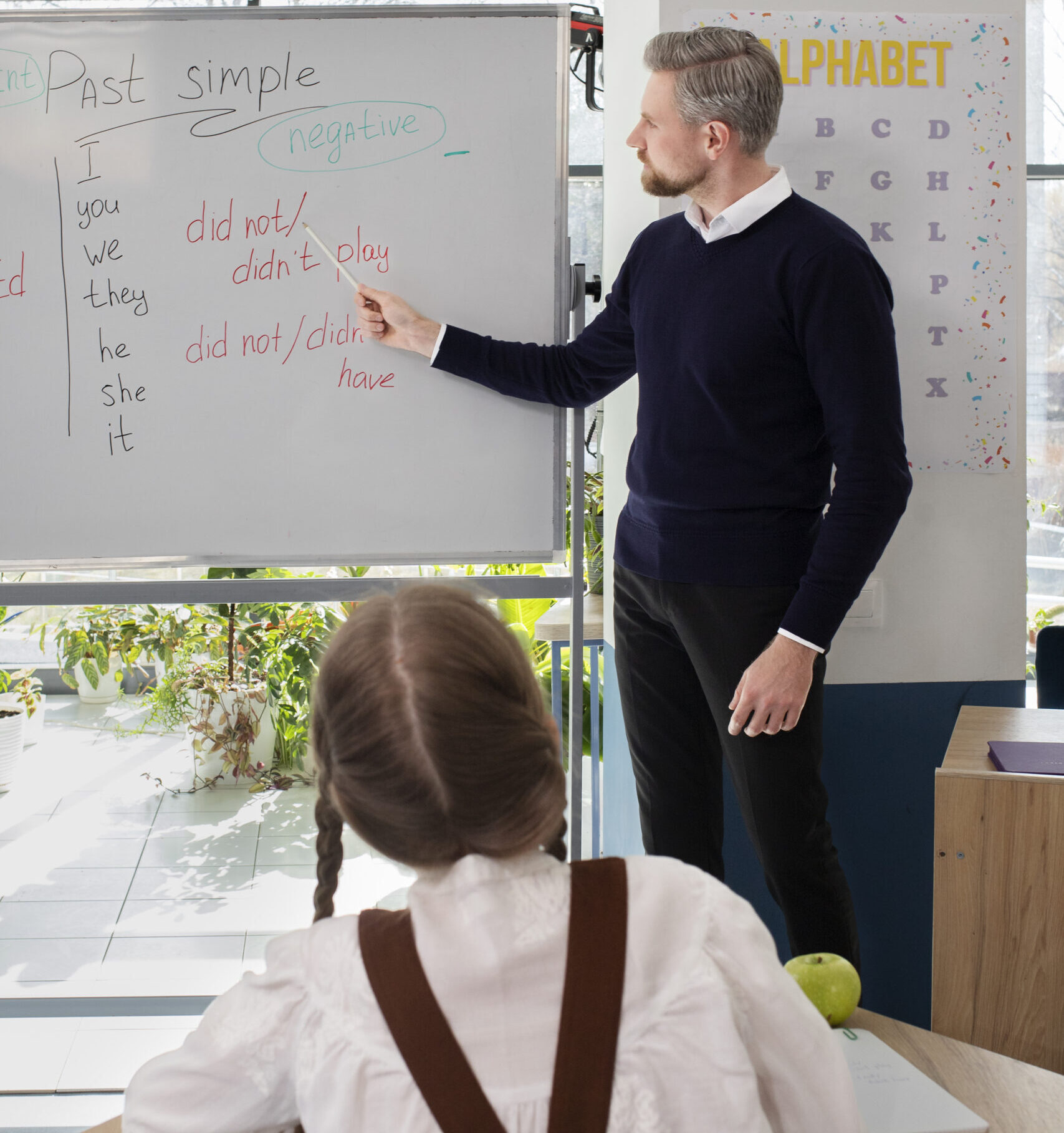
Student Engagement & Enrichment
At Al Amanah College, we go beyond traditional teaching methods to ensure students enjoy learning mathematics. Our Mathematics Faculty offers exciting initiatives, including:
Math Challenges – Encouraging critical thinking and collaborative problem-solving.
Poster Competitions – Creative activities that help students visualise mathematical concepts.
Cambridge Go – An interactive digital platform with practice exams, supplementary materials, and self-paced learning resources.
Numeracy Week – A school-wide event celebrating mathematics with engaging activities and real-world applications.
These programs foster curiosity, engagement, and confidence, helping students see the relevance of mathematics in everyday life.
Technology & Digital Learning in Mathematics
Digital tools and platforms are embedded to support student understanding and engagement including:
Graphing Software & Digital Tools – To explore functions, algebra, and statistics interactively.
Data Analysis Applications – Teaching students real-world applications of probability and statistics.
Online Learning Platforms – Providing additional resources, tutorials, and quizzes.
By integrating technology and hands-on activities, we help students develop a deeper understanding of mathematical concepts while preparing them for the modern digital world.
Assessments & Homework
Assessment plays a key role in tracking progress and ensuring students meet NSW curriculum standards. Our approach includes:
Formative Assessments – Regular quizzes, class activities, and teacher feedback.
Summative Assessments – Topic tests, semester exams, and project-based tasks.
Problem-Solving Challenges – Encouraging logical thinking and application of concepts.
HSC Exam Preparation – Structured revision programs, past paper analysis, and exam techniques.
Homework is designed to:
Reinforce classroom learning through problem-solving tasks.
Encourage independent thinking by applying concepts in different contexts.
Prepare students for assessments by reviewing key topics and practising skills.
Supporting Students & Parents
We believe that mathematics success is a partnership between students, teachers, and parents. To support learning beyond the classroom, we offer:
Parental Guidance Workshops – Helping parents understand how to support their child’s mathematical progress.
Tutoring & Study Sessions – Extra support for students needing additional guidance.
HSC Mathematics Preparation Webinars – Covering study techniques and exam strategies.
For supporting your child, refer to NESA parent guide:
A Future Built on Mathematical Confidence
Al Amanah College is committed to nurturing confident, capable, and future-ready learners. Our mathematics programs equip students with the analytical tools and mindset necessary for success in education, employment, and lifelong learning.
